The Portland Naturalist

The Portland Naturalist
Showing posts with label Great Black-backed Gull. Show all posts

Thursday, 2 October 2014

Foote's Portland Bird Tours ltd

On the 28th, I went off for Tice's Meadow biannual 24 hour birding event. 

But, that didn't stop me getting a patch tick on Portland, as whilst working near Portland Castle in the morning, a Great Spotted Woodpecker called from there.

Once at Tice's the birds were no-where near as good as previous weeks, with only 1 Ruff of the more unusual waders left.  The atmospherics were pretty spectacular.


Plus, the other wildlife was full of highlights. Several Wasp Spider, including my first egg-cases...


...a family of very confiding Roe Deer, and the very rare introduced parasitic plant, Yellow Dodder, starred.


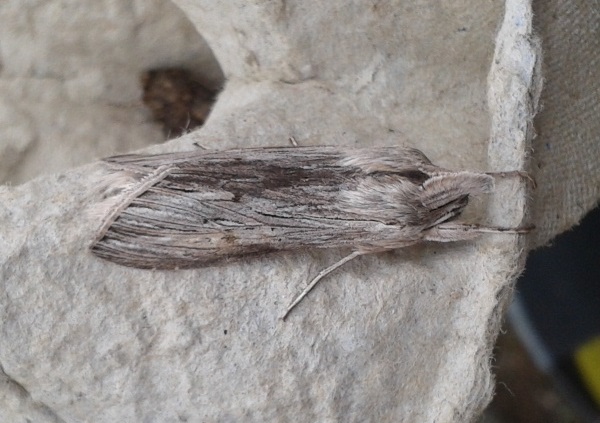
We also ran a couple of moth traps overnight, with the highlights being lots of Black Rustic, singles of Bulrush and Large Wainscot, plus a lifer of Deep-brown Dart (here with a Black Rustic).


On the way back, I helped lead my former local RSPB group from Surrey round Stanpit Marsh, seeing little in the way of highlights.  This was the first of a 4 day holiday for the group, staying on Portland.  It was up to me to take them about the island.

Their first full day on the 29th was spent around the Bill, with the afternoon around the mid-island triangle, finishing at Portland Castle.  A pair of Little Owl at the Obs quarry performed for us, as did a Hobby on the West Cliffs.  Otherwise it was just usual stuff.  Some guys from the rear of the group reported seeing a Jay to me later.  That would have been a patch tick!

At the Castle, the Black Guillemot was initially present, but then flew off before the guys got on it!

 A Gull caused me confusion, as it appeared to be a perfectly good Yellow-legged Gull, being the same size as the nearby Herring.  I did have some doubts, and it was finally decided that it was a small Great Black-backed Gull.  The short wings, lack of mantle moult, and barred greater coverts being the key points.  You live and learn.  Thanks to Brett Spencer and Luke Phillips for the assistance.


An evening walk took in the Grove Hooded Crow.

The next day was spent at the Weymouth RSPB reserves, with Lodmoor producing Marsh Harrier and a mobile Little Stint, and Radipole giving us good views of Bearded Tit, along with Green Sandpipers...


...and who could forget the disgraced Hooded Merganser!


The final day took in the Black Guillemot, which showed well this time, plus a longer walk round the Bill.  Late Yellow Wagtail and Whinchat were found, as was the supposed Siberian Lesser Whitethroat in the Obs Quarry.

Earlier in the morning, I had re-found the Yellow-browed Warbler at the Avalanche Road Hump, and in the afternoon I took a small group there to try and see it.  We heard it call, and saw it for a split second!

I think the group largely enjoyed their trip, even though finding birds was really hard work!  The weather was really kind, and they saw 102 species in 4 days.

This morning on my usual rounds, I saw the patch tick of two over-flying Reed Bunting, and there were also at least 10 Rook through.

The mothing on the island has been pretty good recently, with a few migrants, lifers, and rarities.

The pretty Tebenna micalis of the former...


...Rhomboid Tortrix of the middle...


...and, best of all, a worn Golden Twin-spot of the latter.  About the 130th record for the UK.


This morning I got this troublesome Chestnut.  Initially thought to be a Flounced, but it is probably a strange Beaded Chestnut.


I'm off to start my journey to Fair Isle tomorrow!  Hopefully Spurn will be the location for my half-way stop, and perhaps a rare Shrike if I'm lucky.

Monday, 9 December 2013

Teal or No Teal?

If you're short on time, I'd urge you to scroll down to the Baikal Teal twitch.  I've only got another couple of days to catch up on, but I wouldn't think any less of you of you wished to bypass these, in comparison, very uneventful days!

5th

I spent a morning mooching around the Ferrybridge and Portland Harbour area, but found little to show for it.  Nonetheless, it was still enjoyable in perfect sunny conditions.

I started round at Sandsfoot Castle, as it's often the best point to view the harbour.  Unfortunately, on this occasion it was rather quiet there, with just two flocks, of 6 and 2, Black-necked Grebe out of the ordinary.  It goes without saying that despite doing everything in my power to scrutinise ever bit of the harbour, someone later counted 15!

I then had a nice watch from the visitor centre at Ferrybridge, as the tide receded.  The light enabled me to fully appreciate all the plumage features of the gathered Gulls and Brent Geese, such as these immature Great Black-backed Gull.

 
And I also found a striking Common Gull that could be a serious trap for the unwary, sporting as it did a perfect ring round it's bill.


As I was photographing it, the view got interrupted...


...as the long-staying Black Brant got in the way!

Finally, I suddenly noticed a small flock of Skylark feeding close-by, on the seaweed on the edge of the mudflats.

 
7th

All the birding I got in today was a brief look at Bincleaves Corner, which is the northernmost extreme of Portland Harbour, before I started work in Weymouth.

Yet again, despite the calm conditions, nothing of note in the harbour, but on the wrong side of the breakwater from my point of view was a single female Eider (which presumably later entered the harbour, when it was seen by Joe).

Yesterday

When I got my new car, I told myself that I really should get back into twitching again.  This was largely inspired by the remarkable year the UK has had for twitchable rare birds, with the likes of the Great Snipe, Pacific Swift, Hermit Thrush, and Orphean Warbler all being at the forefront of my mind.  So, to that end, I have decided to try and go for as many of the twitchable good birds that turn up in the UK from now on, though with the restriction of mainland only. 

The first long-distance possibility occurred yesterday, with the appearance, and subsequent stamp of approval, of the Baikal Teal in Lancashire.  As it will be for all these long-distance trips, I ideally needed to find others to share travel costs with.  It came to my attention that a few guys in the New Generation Birders Facebook group were keen to go, including some that were conveniently positioned along my route.

So, we were all set, and the first challenge was getting up at 3am!  That done, I first headed the 150 miles to Hereford to pick up Espen Quinto-Ashman, then another 35 miles onto Kidderminster for Craig Reed, as the day dawned.  Assembled, we did the final 120 mile stint up to Southport, and got there at 9:30, in overcast conditions.

I initially wasn't sure where to park, and my best guess turned out to be a bit wide of the mark, as we had to walk a fair way along the coast road before we got to the area the bird had been yesterday.  Nevertheless, we thought it wise to scrutinise all the Wigeon and Teal flocks on the way, and boy was that a task!  There were hundreds of them! 

A view out onto part of Crossens Outer Marsh, as the sun attempts to break through.


I say part, as the area was massive, with the vast Ribble Estuary saltmarsh on the other side of the road in addition.  I don't envy the job of the WeBS counters for the area!

As we were about to arrive at the line of scanning birders, we received the dreaded 'no sign' message, and our hearts dropped.  We carried on regardless, as with so many duck about, we felt confident it had to be here somewhere! 


Once at the beginning of the seawall, I thought it best to let the others carry on, while I rushed back to get the car.  There was a hellish biting wind blowing, and I don't think any of us could have coped with having to fight our way back to where I'd parked it, particularly if we dipped!

I was almost at the car, when I got a phone call from Craig.  I could barely hear a word he said, as the wind was obviously howling at the exposed seawall where he was!  But, did he really mention something about the bird being found? I wasn't sure!

Anyway, once I'd driven round to the seawall, I was met with a stampede of twitchers, as they frogmarched in a long line towards the road.  A mass exodus like that can only mean one thing!  I overheard a few words from some of them, and all I could gather was that the bird had been found at Marshside, which I took to mean the main reserve.  Hence, why I waited for Espen and Craig to appear, so we could drive round, rather than head off on my own.  I had barely noticed that all the birders had been disappearing down a nearby path, rather than jumping in their cars! 

Once the guys had returned, I learnt that the bird was actually not far away at all, adjacent to Crossens Outer Marsh. 

On arrival at the long line of birders, there was a little confusion, as the bird was sleeping in the middle of a large group of Wigeon, with very few markers nearby!  It was a bit of a struggle, but eventually I found the stunning Baikal Teal, and it stuck out much more than I expected, like a foreigner in fact!

The sun was now out and behind us at this point, and we all got really good views, although the bird was rather distant, and largely inactive. 

A couple of phonescoped shots, the latter using full zoom on the telescope eyepiece.


And this was the view with the naked eye (you can just see the flock in the distance).  Thank goodness for optics!


I would have liked to have watched it for longer, particularly to see it more active.  Reluctantly though, we really had to leave if we wanted to have a go for the Two-barred Crossbills in the Wyre Forest on the way back.

I couldn't resist getting a crowd shot on the way out.


We knew things would be tight what with such a short amount of light at this time of year, but I hadn't really factored in traffic.  It wasn't that bad really, but by the time we'd got to Kidderminster, the sun was almost at the horizon, so I don't think there would have been any chance of catching the birds before they roosted.  A real shame, as we could have spent more time at the Teal!  Hey ho.

In reality though, I think we were all grateful for getting home a bit earlier, cause it had been a very long and tiring day!  I dropped off Craig, then Espen, before getting home to Portland myself just past 8. 

Thoroughly enjoyable!  Maybe an Ivory Gull or two next?  Perhaps more realistically, a Pacific Diver!

Friday, 12 July 2013

Auksome!

Another day off today (the benefit of working part-time), and the sky was lovely and cloudy, so I thought I'd go down to the Bill first thing to look for migrants, and then do some seawatching.  Well, a quick look at Avalanche Road, Top Fields, and Culverwell produced absolutely nothing of note.  Except, in Culverwell I found a tree full of juveniles.  At one point, there were young Linnet, Greenfinch, Great Tit, and Goldfinch, and shortly after some Blue Tits and a Dunnock visited it too!  Must be the day-nursery tree.  A plant lifer here was Brookweed.


Onto the Bill then where I was greeted with little to suggest a decent days passage.  However, within five minutes of me sitting down, a Curlew, a Common Tern, and 7 Manx Shearwater went past, raising my hopes.  But, the next 25 minutes went past totally uneventfully.  That was until 7 on the dot, when I couldn't help noticing a summer-plumaged Black Guillemot passing east close-in with a small flock of Razorbill and Guillemot, sticking out like a sore thumb!  There were several sightings of a bird offshore during the winter, so this is presumably the same individual that has lingered, who knows where!  You would have thought someone would have noticed if it had been in amongst the Bill Auk colony!  That was not the end of the quality, as not so long after that, a Balearic Shearwater passed east at mid-distance.  Also seen was another 7 Manxies and a lingering Mediterranean Gull.

Frustrated that I had not yet got any seabird photos, I spent the next half-hour or so experimenting with phonescoping Gannets!  Not easy!


Next I had a quick look in the obs moth trap.  It was heaving with quality as usual.  The best was this lifer of The Shark.


Amongst the other quality was a Lackey (a species I rarely see as an adult).


This Muslin Footman, which I have only seen previously in Wales.


And a Cochylis hybridella.


On the way slowly home for lunch, I decided to pop into Cheyne Weares, for no particular reason really.  As I arrived, I could hear the small birds calling wildly, and looking off the cliff, a cloud of Pipits and Linnets appeared, surrounding a juvenile Cuckoo!  The first time I've seen this plumage.  It flew off and landed out of view in a tree by Avalanche Road.  I'm certain it was a migrant, and not a locally-bred bird.
 
I continued to walk along the cliffs, and stumbled on the Portland plant ticks of Ploughman's Spikenard, Small Scabious, and Golden-rod (below).


The sun was now out with all it's force once again, and I took the route home that took me past Suckthumb Quarry, and onto Weston St.  On this area of grassland, I found this mating pair of Crescent Plume moths (notice that the leaves of Restharrow - their foodplant - are in the background).

 
And this is not something you just come across everyday!  A female Drinker with her eggs.


This was all just the morning remember!  Portland is a magical place.
 
In the afternoon I thought it might be worth holding a vigil at Ferrybridge, as you never know what might drop in.  The problem with this site (particularly on a day like this), is there is always another moron happy to ignore the nature reserve signs.  Nevertheless, I managed to count 53 Mediterranean Gull in attendance.
 
 
And I was entertained by watching this Great Black-backed Gull trying to devour a gigantic (already dead) Spider Crab.
 
 
Once the tide had gone fully out a nice sandy island, where no human can tread, had appeared.  On this I found 3 Dunlin, a Grey Heron, and 3 Sandwich Tern, including an early juvenile, begging for food as usual.  Are there are any colonies closer than Brownsea?
 
I had to walk along Chesil for a little way in order to see the aforementioned sandbank, and as I did so, I found a botanic gem.  It may not look much, but this Four-leaved Allseed is pretty rare (the green one, the red one is a Stonecrop).


What wonders await tomorrow.