The Portland Naturalist

The Portland Naturalist

Wednesday, 6 August 2014

No Rest for the Moth-ers

It's been quite a while since my last update, and although I've built up a nice little backlog of photos, in truth there's not a great deal to talk about.  The lean months of summer (for birds particularly) will hopefully end soon enough.
 
A couple of weeks ago I helped with a moth trapping session at Alner's Gorse, and although the final list was impressive, the only Tick I managed was this one.  In hindsight we were all very lucky, as we walked around in the long grass in shorts!


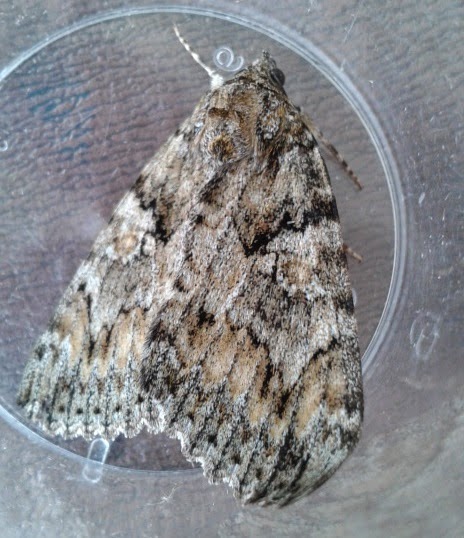
It's all been about the moths really otherwise, as I helped to empty the traps at the Bird Observatory for a week (getting up at 5 each day). I'm extremely grateful to everyone there for letting me have the opportunity.  A selection of the best species.

Wormwood Shark


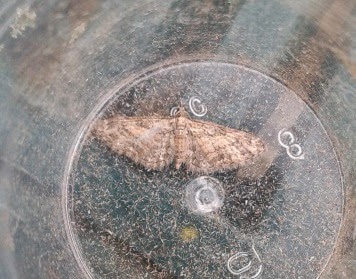
Plain Pug


L-album Wainscot


Crocidosema plebejana


The Shark


Gem


Eudonia lineola


Evergestis extimalis


Epermenia aequidentellus


Four-spotted


Marbled Green - A strange form


Southern Wainscot


Cydia amplana


Webb's Wainscot


Dog's Tooth


Pearly Underwing


Plus, a couple of well camouflaged micros...

Epiblema scutulana
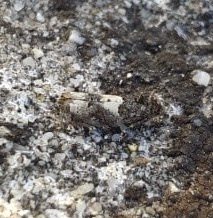
 
 
Digitivalva puilcariae


A few more interesting things from the trap, such as the UKs largest Cranefly, Tipula maxima.

 
And two different species of huge Lacewing.


On one morning, I was joined by a Common Shrew out in the open while I emptied a trap. It was no coincidence that it was hunting in the area I had released the moths the previous day!

On one of the nights we had a bit of a disaster when a rain-guard fell onto the bulb, surrounding it with the molten plastic (makes you realise how hot they run).  The bulb still worked, and anything hitting it then got stuck fast. Modern art perhaps?


At Ferrybridge on another day, I was able to find an example of the scarce Wormwood-feeder Eucosma pupillana, with little problem.


Ichneumon Wasps are frequent visitors to moth traps, but it was fascinating watching this guy at work, searching a Knapweed for caterpillars to parasitize.  It was very interested in this rolled leaf, which no doubt contained a caterpillar, or be it one far too small for this impressive beast. Nonetheless, how did it know to look there?


I have finally managed to get out to do a little bit of birding in the last few days, with little reward.  It was great watching a seabird feeding-frenzy off the West Cliffs today though, that included a Balearic Shearwater and a Great Skua.  Always nice of course to see Melodious Warbler in-hand last week too, though I so nearly missed it!
 
A Cornish seawatch in order for the weekend?

Tuesday, 22 July 2014

Six-belters! - Part 2

Hope you enjoy my 100th blog post!

On the 19th, I popped into the Obs in order to wonder at the amazing selection of rare moths caught overnight. 

Now, I realise there is something rather unsatisfying about seeing moths by coming across a table full of pots, as apposed to emptying the trap yourself (something I hope to rectify shortly!), but in the absence of that opportunity I had to make do with this,  and it was still fantastic to see such species.

Top of the bill of course was the first UK mainland record of Southern Grass Emerald, looking most like the equally-rare (from a Portland perspective) Small Grass Emerald.  Belter no. 3.


In the looks stakes, there's no doubt this Dark Crimson Underwing took the prize. The fourth belter.


Also among the lifers were one of for Splendid Brocade...


...and the rare saltmarsh inhabitant, Pediasia aridella.


Not a lifer, but only my second Chevron, was also present.


Straight after work, I headed back up to Surrey for the rest of the weekend.  I took a quick look at Tice's Meadow on my arrival, and it was looking fabulous for waders with a nice muddy edge.


Indeed, on this tiny spit in front of the mound was 2 Dunlin, 5 Little Ringed Plover, and 4 Common Sandpiper. The place is going to have an awesome autumn!

Come the evening, I headed for a large garden near Guildford, that happens to be the workplace of an old mate of mine from College, Matt ( http://mostlyscarce.tumblr.com/ ), along with another College friend, Steve, for a spot of mothing.

Conditions were excellent, with warm muggy conditions.  Even so, we had an unbelievable evening for moths, with a total of over 170 species!  Not to mention the calling Tawny Owl and Common Sandpiper, plus the great insect sightings of a Cockroach (probably Dusky), Giant Lacewing, and a Weevil with the biggest snout I've ever seen! 

The weather certainly helped, but, with not only a wide range of native and non-native plants within the garden, but with ancient mixed woodland, heathland, and a reed-fringed pond all close-by, the location is a fabulous one.

The only macro lifer for me was a Silky Wainscot, but this is a pretty scarce moth in Surrey. It's special for being one of the only species in which it's larvae has a omnivorous lifestyle, quite happy to eat other caterpillars as well as chew Reed leaves! The 5th belter.


The other top macros were a White-line Dart...


...and a Maple Pug, ID'd after the event.

 
The list of micros was also impressive, with the great (Scoparia basistrigalis and Lesser Wax Moth)...


...and the small (Bucculatrix ulmella and Phyllonorycter platanoidella) represented.


Shame my camera can't do these little gems justice!

Plus, there were the medium-sized of course!  Pammene aurita is a recent colonist to the UK...

 
...whereas Anacampsis blattariella is widespread.


Mompha propinquella feeds on Rosebay Willowherb...


...and we got at least two Agonopterix alstromeriana, even though we didn't know of any of it's foodplant, Hemlock, around.


We were also unsure of the presence of Poplar in the area, but there must be some as we got a Figure-of-eighty, as well as the rare, and the subtly stunning...well, I won't tell you, as I'm sure you can read the photo!  The last of the six belters!


What an enjoyable session.  That's despite the fact I sustained at least 14 Mosquito bites, and poor old Steve got stung by a Hornet!

 This was followed by the main reason I came back to Farnborough for the weekend, the Air Show.

Mother nature was clearly not happy about me turning my bins to those big unnatural metal beasts of the sky, so had only my third ever Purple Emperor fly through my line of sight, before flying about amongst the gathered crowd!  I wasn't totally sure which way to look, but as I'd seen the plane in view at the time (the Avro Vulcan) three times before, the butterfly was the rarer sighting!  My first decent view of an Emperor for 17 years!

Don't worry you ornithophiles, I'll get back onto the birds shortly hopefully! Autumn is approaching!

Six-belters! - Part 1

I've got a week to update, and it's been packed with quality wildlife.  It's largely been about the moths though it has to be said!

On the 14th, I did a quick look at Barleycrates Lane area, but the only highlight was a vast number of Small Tortoiseshell caterpillars devouring a patch of Nettles.


On the 16th and 17th, I finally restarted my early-morning birding walks round the mid-Portland triangle (Barleycrates, Reap, and Suckthumb).  My efforts of getting up at 5am were hardly justly rewarded, but a Yellow Wagtail flying around at Barleycrates Lane was nice.  Plus, at Ferrybridge, which was looking promising...


...was just a Common Sandpiper and a couple of Whimbel out of the ordinary, though I did apparently miss a Little Stint!

The bizarre highlight of these excursions though, was finding this fledgling Wren stuck fast in some Burdock seedheads, at Suckthumb Quarry!


I was able to free it, but it turned out it had both it's wings, one foot, plus it's beak all stuck.  It's head was buried deep in the seedhead, and I wonder whether it was attempting to catch insects amongst the seeds when it got stuck.  Struggling to free itself, it got even more of it trapped by the spiky seeds.


I released it into a nearby bush, where the rest of the family was calling from.


An additional walk was a quick look at the damp area beyond Bumpers Lane, in the hope of searching the Willows I'd seen there for an origin of the Red-tipped Clearwing found in Easton recently.  No obvious larval exit holes or pupa, but it looks a promising site for moths.  A number of interesting species were disturbed, such as Cochylis roseana.  Surely a trapping would be worth doing here?

A sight for saw eyes nearby...


In the evening, I took an impromptu walk round the fabulous King Barrow Quarry reserve with Megan Shersby ( http://mshersby.wordpress.com/ ).  We had just gone through the entrance, when Megan pointed out something sitting on a seed-pod (I suspect hoping it to be Hymenoptera!).

Unbelievably, it was a Six-belted Clearwing, only my second Clearwing species.  What a beauty! The main belter (No. 1).


As usual, the place was full of butterflies.  I was particularly concentrating on the moths though, and we found some good stuff such as Chalk Carpet and this rare-for-Portland Pinion-streaked Snout (it was worn, you may have to take my word for it!).

 
The other top moth was this Syncopacma sp, the habitat and slightly curved line suggesting taeniolella.


In the evening of the 18th, I took my last stint at the Little Tern colony, as the wardening efforts wind down for the season.  Only two more chicks to fledge, and most of the birds were off elsewhere, so it was a fairly quiet vigil.

I still managed to find something new however, with this fairly rare Sea Pea.  Belter number 2..


Part 2 coming soon...

Monday, 14 July 2014

Morden we were Expecting

In terms of proper Portland birding, I've just been restricted to a few short walks in the Barleycrates and Suckthumb area, with not a great deal to be seen.

On one day, every flower was swarming with hoverflies, mostly Episurphus balteatus.


But not all made it out alive.  Misumenia vatia, the Common Crab Spider (or White Death) laid in wait.


On an Apple tree in Barleycrates Lane I came across these large unidentified moth eggs, possibly of one of the larger species such as Oak Eggar.


But, also on the same tree was this fantastic Chinese Character caterpillar, the first of these I've seen.


Later, a walk at Tout Quarry produced this unidentified caterpillar on Viper's-bugloss.  These green caterpillars could be any number of things!


On Friday night, I joined a few members of the Dorset Moth Group in moth trapping at the wonderful Morden Bog reserve near Wareham.  I'd never been there before, and I have to say it looked really nice, most like my beloved Thursley Common back in Surrey.

We set up seven traps, although it wasn't easy getting to them on the bog with no wellies! Once started we were soon seeing quality moths coming in.  The first of an incredible six lifers was this well-named Beautiful Brocade.


And I netted the scarce micro, Biselachista albidella.


At least two Rosy Wave were about, another rare species.


I potted a Highflyer sp., which I wrongly assumed to be a May.  The next morning it was confirmed as the new for me, Ruddy Highflyer.  Also at this time, the ultra-rare Dingy Mocha was found in a trap, just before I had to leave.

There was even plenty of quality amongst the species that weren't lifers, with the likes of Plain Wave, Dotted Border Wave, Silver Hook, and this worn Purple-bordered Gold.


But, about halfway through the night, I netted a moth by one of the traps that looked promising for the species that had brought us here in the first place.

Indeed it was, a fabulous Reed Leopard, which only occurs here and at one or two sites in Norfolk.  A second was later found in a trap.  Phwoar, look at that abdomen!


I fell asleep in my car to the sound of churring Nightjar.

On Saturday evening, I did my usual Little Tern wardening shift. 

They continued to be harassed by a male Kestrel, but the hard work of the entire wardening team have meant a minimum of 30 fledglings as I write, still with 30 odd chicks to go.

Unlike with my other stints, this evening I spent most of the time down by the shoreline, where I got amazing views of all the action.


And finally, whenever you're down there, keep an eye out for the rare Siamese twins!


I did another mothing event yesterday morning, as I took a look through the traps at Lankham Bottom Butterfly Conservation reserve.  Not a great deal to shout about, but the likes of Shark, Reddish Light Arches, Ghost Moth, and Plain Golden Y (a lifer) were notable.

I'm determined to get out early birding soon.  Will I be able to tear myself away from my bed tomorrow?